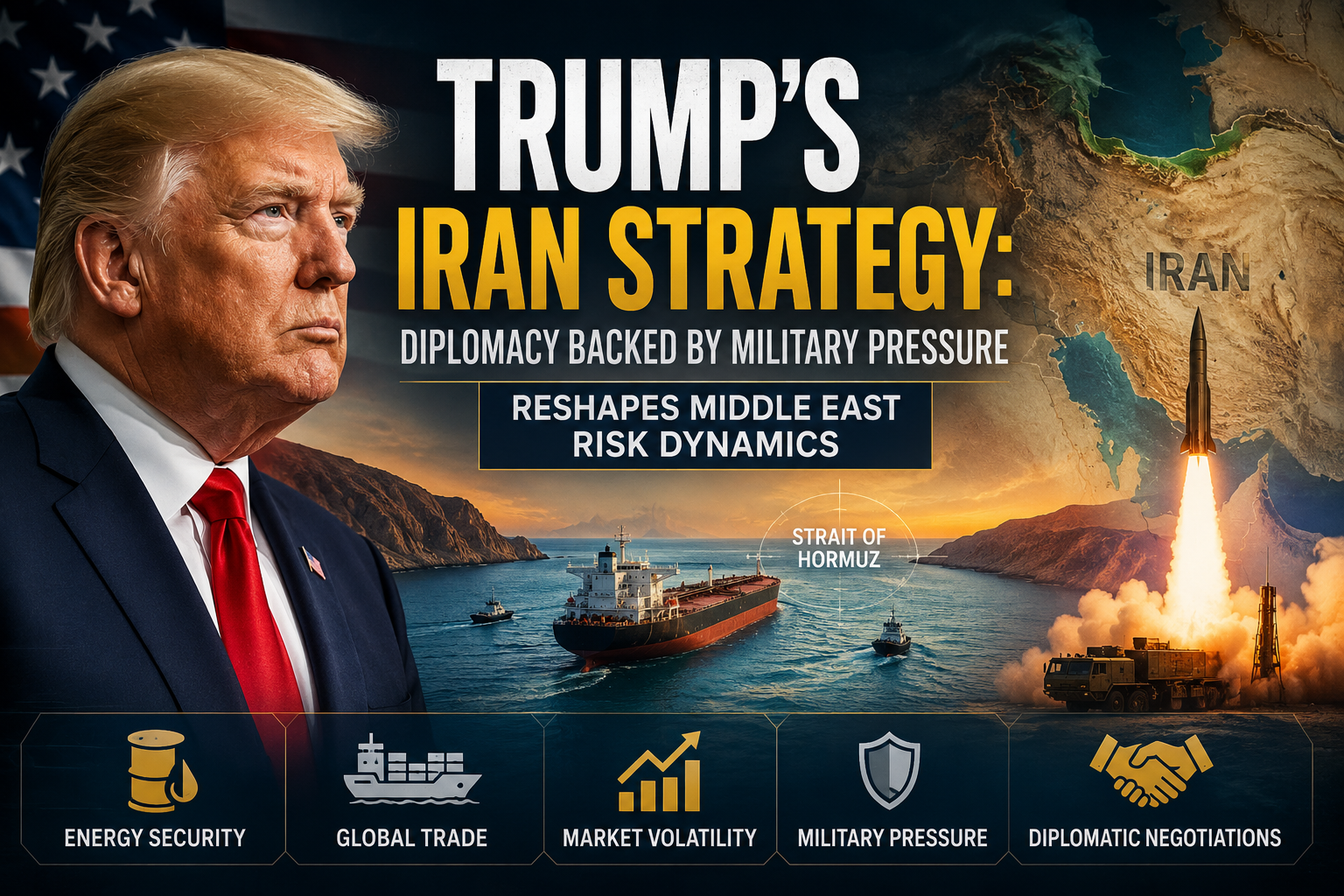
Trump’s Iran Strategy: Diplomacy Backed by Military Pressure Reshapes Middle East Risk Dynamics
The geopolitical temperature in the Middle East has once again intensified after Donald Trump signaled a renewed pressure strategy toward Iran, one that combines diplomatic negotiation with the threat of overwhelming military escalation.
In a recent statement posted on Truth Social, Trump suggested that the ongoing regional conflict could be brought to an end if Tehran agrees to the terms of a proposed framework reportedly under discussion between the two sides. While the exact contours of the agreement remain unclear, the message reflected a familiar geopolitical formula: negotiate from a position of strength.
The statement immediately attracted global attention, not merely because of its political implications, but because of what it potentially means for energy markets, shipping routes, investor confidence, and broader financial stability across the Middle East.
A Strategic Offer Wrapped in Pressure
Trump indicated that acceptance of the proposed deal would effectively conclude the military operation referred to as “Epic Fury” while simultaneously reopening the critically important Strait of Hormuz for unrestricted global trade.
The Strait of Hormuz remains one of the world’s most strategically significant maritime corridors. A substantial percentage of global crude oil and liquefied natural gas exports move through this narrow passage every day. Any disruption in the region immediately reverberates across:
* Global crude oil prices
* Shipping insurance costs
* Commodity markets
* Currency stability
* Equity market sentiment
By specifically referencing Hormuz, Trump’s remarks were not merely political; they were deeply economic in nature.
The reopening of unrestricted trade routes would likely ease volatility in global energy markets and reduce concerns surrounding supply disruptions that have periodically unsettled investors worldwide.
The Military Warning Behind the Diplomacy
Alongside the diplomatic offer came a direct warning.
Trump stated that if Iran rejects the proposed terms, the United States could intensify military operations at a far greater scale than previously witnessed. The remarks reinforced Washington’s longstanding doctrine of “maximum pressure,” where negotiations are pursued simultaneously with strategic coercion.
Interestingly, Trump also referenced the temporary pause of “Project Freedom,” suggesting that diplomatic channels are still being preserved despite heightened military rhetoric.
This creates a classic geopolitical balancing act:
* Maintain military leverage
* Preserve negotiating space
* Avoid immediate escalation
* Keep economic pressure intact
Such strategies are often designed not only for adversarial governments, but also for global markets, allies, and domestic political audiences.
Why Markets Are Watching Closely
Financial markets historically react sharply to instability in the Middle East, especially when tensions involve oil-producing nations or major maritime trade routes.
Even the possibility of escalation around the Strait of Hormuz can influence:
* Brent crude prices
* Safe-haven demand for gold
* Currency movements
* Defense-sector stocks
* Emerging market volatility
For investors, geopolitical risk is no longer separate from financial analysis, it has become an integral part of capital allocation and risk management.
This is particularly important in an era where algorithmic trading systems and institutional funds react instantly to geopolitical headlines, social media statements, and military developments.
Negotiations Still Far from Certain
Despite the strong rhetoric, Trump also appeared cautious about the prospects of an immediate peace breakthrough.
He acknowledged that negotiations remain difficult and may take considerable time before any formal understanding is achieved. That admission highlights the complexity of modern geopolitical conflicts, where military positioning, sanctions, domestic politics, regional alliances, and economic interests all intersect simultaneously.
In many ways, the statement reflected both confidence and realism:
* Confidence in strategic leverage
* Realism about diplomatic complexity
The Bigger Picture
The developments surrounding the United States and Iran extend far beyond bilateral relations. They represent a broader contest involving:
* Energy security
* Global trade stability
* Strategic maritime control
* Regional alliances
* Economic influence in the Middle East
For investors and analysts, these events serve as a reminder that geopolitics remains one of the most powerful drivers of global financial sentiment.
Whether the current tensions move toward negotiation or escalation, one fact remains clear: the intersection of politics, military strategy, and financial markets is becoming increasingly inseparable in the modern global economy.
